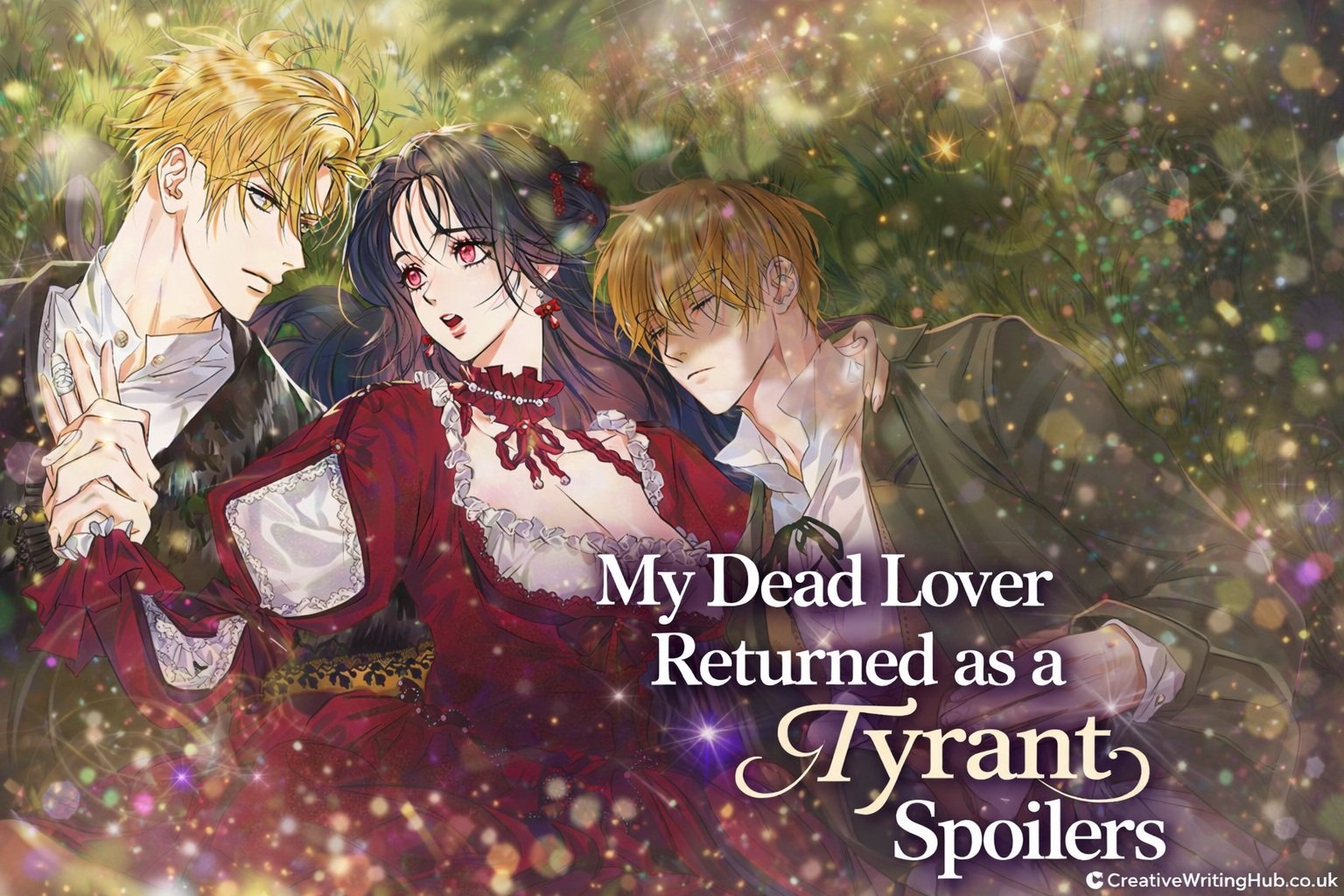
My Dead Lover Returned as a Tyrant has quickly become one of those stories that stays with readers long after the final chapter ends. The premise alone suggests emotional intensity, but the real impact comes from how the narrative handles loss, power, and irreversible change. Readers searching for My Dead Lover Returned as a Tyrant spoilers are usually not looking for shallow summaries. They want to understand what truly happens, why the characters behave the way they do, and how the story’s emotional core evolves after the shocking reunion.
This article explores the major spoilers, character transformations, and thematic layers that define the series. It focuses on how the lover’s return reshapes the emotional landscape, how tyranny replaces intimacy, and why the ending feels both tragic and inevitable. If you want clarity without losing the emotional depth of the story, this breakdown will guide you through it.
The Shocking Return That Changes Everything
The story begins with grief that feels final and unhealed. The protagonist believes her lover’s death marked the end of her emotional world, and the early chapters reinforce that sense of permanent loss. When he returns, the moment is not framed as a miracle. It is unsettling, restrained, and heavy with tension. This choice immediately signals that something fundamental has shifted.
The returned lover is not the person she mourned. His presence carries authority, fear, and emotional distance. The spoilers reveal that his resurrection is tied directly to the rise of a tyrannical regime, one built on control rather than compassion. This contrast between who he was and who he has become is the emotional axis of the entire story. The reunion scene does not offer comfort. Instead, it forces the protagonist to confront a version of love that no longer recognizes her in the same way.
How Love Turns Into Power and Control
One of the most painful spoilers in My Dead Lover Returned as a Tyrant is the realization that love does not survive power unchanged. As the story unfolds, it becomes clear that the tyrant’s authority was not accidental. His resurrection is intertwined with ambition, political necessity, and a willingness to sacrifice emotional bonds for dominance.
He remembers their past, but memory does not soften him. Instead, it sharpens his resolve. The tyrant views emotions as weaknesses he can no longer afford. Scenes that might have once been tender are now charged with imbalance. He speaks as a ruler, not a partner. He observes rather than connects. This transformation forces the protagonist into a painful role where love becomes something she must hide rather than express.
These spoilers highlight the story’s refusal to romanticize power. The tyrant’s rule is effective, but it is emotionally hollow. His control isolates him, even from the one person who knew him before the crown and the fear.
The Protagonist’s Emotional Conflict After the Reunion
After the return, the protagonist enters a prolonged state of emotional contradiction. She sees fragments of the man she loved, but those moments are fleeting and unreliable. Spoilers reveal that her greatest struggle is not choosing between love and safety, but accepting that the man she loved no longer exists in a form she can reach.
Her interactions with the tyrant are layered with restraint. She cannot challenge him openly, yet she cannot let go of the past either. This internal conflict defines much of the middle narrative. Every conversation becomes a test of loyalty and self preservation. She must constantly assess whether her words will trigger affection or punishment.
The story does not offer easy catharsis. Instead, it slowly shows how unresolved love can become a liability in a world ruled by fear. The protagonist’s growth comes from recognizing that survival sometimes requires emotional detachment, even when the heart resists.
Hidden Motivations Behind the Tyrant’s Actions
Spoilers reveal that the tyrant’s cruelty is not purely malicious. His decisions are shaped by a belief that emotional distance is necessary for stability. He sees himself as a guardian of order, even when his methods are brutal. This self justification makes him more complex than a standard villain.
There are moments where his actions suggest regret, but he never allows that regret to dictate his choices. He prioritizes control over reconciliation. In doing so, he reinforces the story’s central theme that power gained through sacrifice often demands continued sacrifice to maintain it.
The tyrant’s refusal to reclaim his former self is deliberate. He understands that returning to who he was would weaken his authority. This awareness makes his relationship with the protagonist tragic rather than hopeful. He chooses tyranny not because he forgot love, but because he believes love has no place in his new world.
Major Plot Twists That Redefine the Story
As the narrative progresses, several key spoilers reshape how readers interpret earlier events. One major revelation confirms that the resurrection was never meant to restore life as it once was. It was designed to create a ruler capable of absolute control, even at the cost of personal humanity.
Another turning point occurs when the protagonist realizes that staying close to the tyrant does not influence him as she hoped. Instead of softening his rule, her presence reminds him of what he has lost. This realization marks a shift in her role within the story. She moves from passive observer to someone who must decide whether love is worth continued emotional harm.
These twists reinforce the story’s commitment to emotional realism. There are no shortcuts to redemption, and no sudden reversals that erase the cost of earlier choices.
How the Ending Reshapes the Meaning of the Story
The ending of My Dead Lover Returned as a Tyrant is one of its most discussed spoilers because it refuses to deliver a conventional resolution. Love does not conquer tyranny, and power does not restore intimacy. Instead, the conclusion emphasizes acceptance over reunion.
By the final chapters, both characters understand that their paths diverged the moment he returned as something other than the man she loved. The protagonist’s final decision reflects growth rather than defeat. She chooses emotional freedom over attachment to a memory that no longer aligns with reality.
The tyrant remains powerful, but isolated. His rule continues, but without the emotional anchor that once defined him. This ending reinforces the story’s central message that some transformations cannot be undone, no matter how strong the past bond was.
Why These Spoilers Matter to Readers
My Dead Lover Returned as a Tyrant spoilers resonate because they explore questions that feel deeply human. Can love survive absolute power. Is it possible to reclaim someone after they fundamentally change. When does holding on become self destruction.
The story’s strength lies in its refusal to offer comforting illusions. It presents love as something fragile, shaped by circumstances and choices. Readers are drawn to these spoilers not for shock value, but for understanding. They want to know how the story navigates grief, transformation, and acceptance without betraying emotional truth.
Final Thoughts on My Dead Lover Returned as a Tyrant Spoilers
My Dead Lover Returned as a Tyrant stands out because it treats its premise with emotional seriousness rather than fantasy escapism. The spoilers reveal a story that prioritizes character psychology over easy romance. Every major development reinforces the idea that resurrection does not mean restoration.
For readers seeking depth, clarity, and emotional realism, understanding these spoilers enhances appreciation rather than diminishing it. The story remains powerful because it acknowledges that love can exist without reunion, and that sometimes letting go is the most honest resolution of all.